 Frequently Asked Questions
Pill cutter and splitter buying guide: avoid pitfalls, a must-read for beginners, say goodbye to improper medication
TL;DR
A pill cutter is not a waste of money; choosing the right precise pill splitter can ensure drug efficacy and safety. It is recommended to set a budget of 20-40 yuan and avoid hand-breaking and low-quality products.
Key Takeaways
- 新手最常犯的错误是手掰药片,导致剂量不准,可能影响药效甚至身体健康。
- 选择切药器时,应优先考虑不锈钢或陶瓷刀片、稳固的V型槽固定设计以及厚实的塑料外壳,预算在20-50元能买到可靠产品。
- 并非所有药片都能切割,缓释片、肠溶片、胶囊等特殊剂型切开后会破坏药效或产生副作用,使用前务必查阅说明书或咨询药师。
- 每次使用切药器后都应彻底清洁并干燥存放,避免药粉残留导致交叉污染,影响用药安全和健康。
Many beginners think a pill cutter is unnecessary and just break pills by hand, resulting in inaccurate dosages that affect efficacy or even health. Based on experience from those who have been through it, this article will expose common mistakes in buying pill cutters, teach you how to choose a safe, precise, and cost-effective portable pill splitter, help you avoid wasting money on pitfalls, and ensure the standardization and safety of your daily medication.
Let me tell you, when many beginners first need to split their medication doses, their first thought is: break it by hand, cut it with a knife, or even bite it with your teeth? I thought the same way back then, and ended up with crumbs everywhere, inaccurate doses, and even sent the pill flying. Don't say I didn't warn you—this is the most common mistake beginners make! People assume they can just casually split a pill in half or into quarters, but the result is either too much or too little, greatly reducing the effectiveness of the medication. And for some drugs, inaccurate dosing can even be risky.
Today, let's talk about something that seems insignificant but is actually very important—the Pill Splitter & Divider. Although this gadget often appears as a "freebie," it's by no means a dispensable little tool. For anyone who needs precise control over their medication dosage, it's a lifesaver.
Pitfall 1: Randomly breaking pills by hand, dosing is pure guesswork
How to spot this pitfall?
Do you think that if a pill has a score line in the middle, you can just break it along the line and be done? Or maybe you use a kitchen knife or a fruit knife to cut it? If you're doing this, congratulations—you've already stepped right into the trap. Breaking pills by hand, even scored ones, makes it very hard to guarantee both halves are perfectly symmetrical. If you apply uneven force or the pill is a bit hard, you'll either crush it or break it crooked. Cutting with a knife is even more troublesome—the pill tends to slip, the cut is uneven, and there are lots of crumbs.
How to avoid it?
Simple—don't trust your hands or your knife skills. Get a professional Pill Splitter. The precision of your medication dosage directly affects treatment outcomes and safety, especially for medications that require long-term use or are dose-sensitive (such as certain heart medications, blood pressure drugs, or pediatric medicines). Even a tiny deviation can lead to reduced efficacy or worsened side effects. Think about it—if your doctor told you to take half a pill, but you end up with a third, can the effect really be the same?
Pitfall 2: Buying a cheap, low-quality pill splitter—uneven cuts and hand injuries
How to spot this pitfall?
Pill splitters on the market range from a few yuan to dozens of yuan, and they all look pretty similar—isn't it just a blade plus a shell? I once bought one for less than ten yuan out of cheapness, and the blade was as dull as a nail clipper. Cutting a pill took forever, the pill got crushed, the cut was rough, and the plastic shell became loose after just a few uses—it felt like it would fall apart at any moment. Worse still, the blade wasn't well protected, and I nearly cut myself.
How to avoid it?
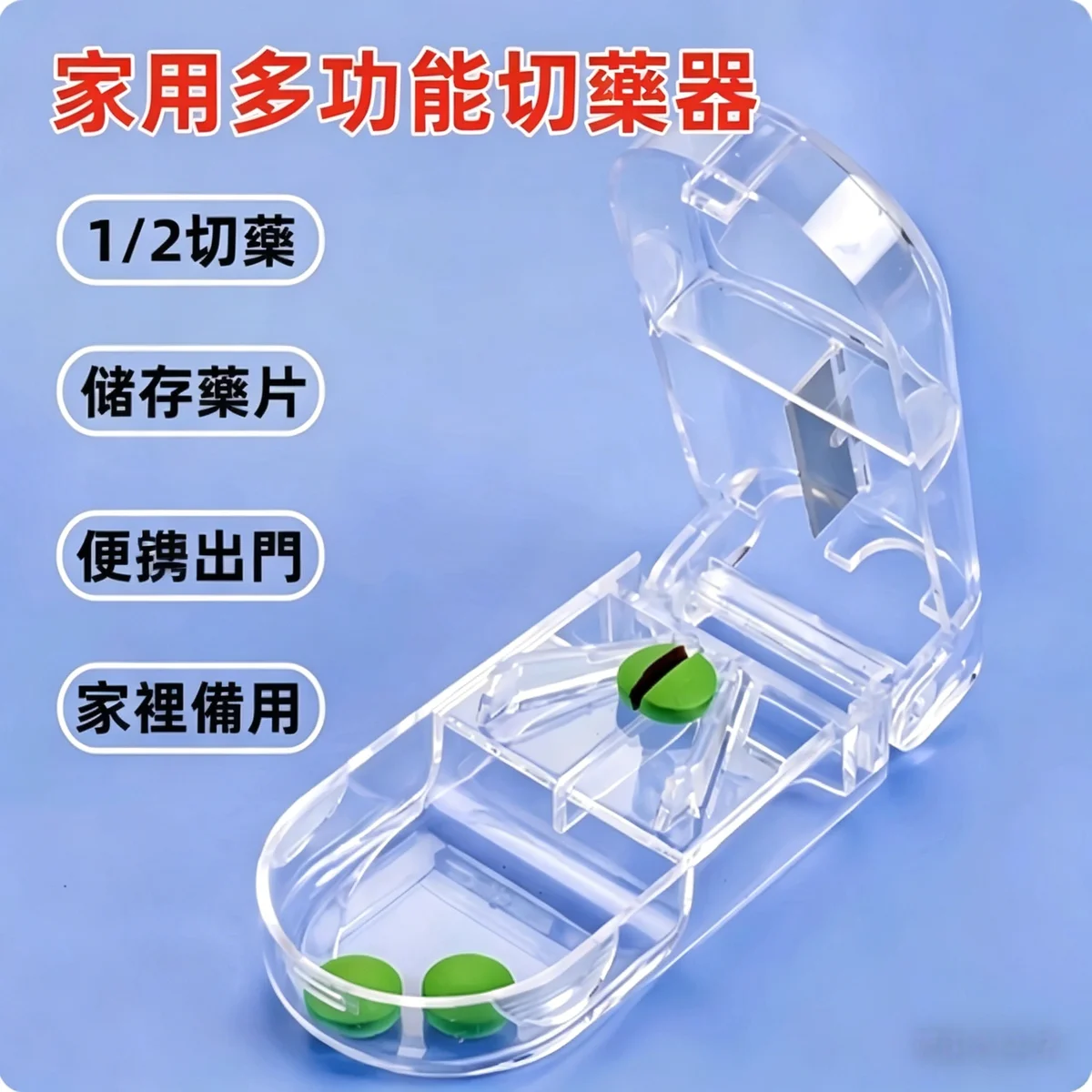
You get what you pay for—this principle is perfectly illustrated here. The core of a good Pill Splitter lies in its blade and structure. The blade must be sharp and durable, typically made of stainless steel; the structure needs to be sturdy, firmly holding the pill in place to prevent slipping. When buying, pay attention to the following:
* Blade material and sharpness: Stainless steel blades are best, and they should look sharp. Some products use ceramic blades, which are also excellent.
* Holder slot design: The pill should sit securely without wobbling. A V-shaped groove or adjustable slot is ideal, accommodating different sizes and shapes of pills.
* Material and workmanship: The plastic shell should be thick, free of burrs, and open/close smoothly. Cheap plastic tends to age and crack over time.
* Price expectations: Don't expect a few-yuan product to work well. A reliable Precision Pill Splitter typically costs between 20-50 yuan. In this price range, you can basically get a quality product with storage features, and even one that splits pills into halves or quarters.
Recommendations by budget and needs:
* Basic model (approx. 15-25 yuan): Only has the splitting function, with a sharp blade and a well-designed holder slot. Suitable for users who occasionally need to split pills and don't require high portability.
* With pill case (approx. 25-40 yuan): Besides splitting, it comes with one or more small pill cases, making it convenient to carry your split pills with you, protecting them from moisture and contamination. This type of Portable Pill Case is highly practical and strongly recommended for those who take medication daily or travel often.
* Multi-functional model (approx. 40-60 yuan): Besides splitting and storage, it may also include a grinding function or more precise scale adjustments. If you need to grind pills for children or the elderly, or if your medication dosage is especially precise, consider this category.
Pitfall 3: Cutting all pills without considering their properties
How to spot this pitfall?
Do you think that as long as it's a pill, it can be cut? That's a big mistake! Many pills look similar, but their "inner workings" are vastly different. I made this mistake before—I cut an extended-release tablet, and the drug was released prematurely, making me feel quite unwell.
How to avoid it?
Not all pills can be cut and taken. Remember this principle: Before cutting any pill, be sure to read the instructions or consult your doctor/pharmacist!
The following types of pills generally cannot be cut:
* Extended-release/controlled-release tablets: These use special technology to release the drug slowly and continuously. Once cut, the drug is released all at once, causing blood concentration to spike, which may lead to toxicity or side effects, while also shortening the duration of action.
* Enteric-coated tablets: These have a special coating designed to protect the drug from stomach acid, allowing it to reach the intestines for absorption. Cutting destroys the coating, and the drug may be broken down in the stomach, losing its effectiveness or irritating the stomach.
* Sugar-coated/film-coated tablets: This coating not only masks the bitter taste but may also provide protection. Once cut, the drug is prone to moisture and oxidation, affecting stability.
* Capsules: Capsule forms absolutely cannot be cut—they exist to protect the drug or control where it's released. Opening a capsule may render the drug ineffective or irritate the esophagus.
* Irregularly shaped or unscored tablets: Pills with irregular shapes or no clear score line are generally not recommended for self-splitting, as it's hard to ensure even dosing.
Safety reminder: Randomly cutting pills can at best reduce effectiveness, and at worst cause harm to your body. For any medication you're unsure about, remember "don't cut, don't touch"—this is the most important medication safety principle.
Pitfall 4: Neglecting cleaning and storage, cross-contamination causes trouble
How to spot this pitfall?
Do you just toss your pill splitter aside after use, or leave it in a damp bathroom? You think the leftover powder and debris on the splitter don't matter? Let me tell you, this is another big trap! Different medications' ingredients can interact with each other, leftover powder can breed bacteria, and a humid environment is a breeding ground for germs.
How to avoid it?
After every use, be sure to clean your Precision Pill Splitter. Use a small brush or cotton swab to remove leftover powder and debris, then wipe with a clean cloth. If the material is washable, you can also rinse with water and let it dry completely. Store it in a dry, dark place, away from moisture and direct sunlight. If your splitter has a built-in Portable Pill Case feature, put the split pills into the sealed case promptly to prevent moisture and secondary contamination.
Safety reminder: Pills are something you put in your mouth—any step that could lead to contamination cannot be overlooked. Poor cleaning may cause different medication ingredients to mix, leading to adverse reactions; bacterial growth could cause infections.
Pitfall 5: Thinking pill splitters are useless, hand-breaking is more "convenient"
How to spot this pitfall?
Some friends might think, "I have strong hands, breaking pills is easy," or feel that pill splitters are too much hassle and take up space. They might even think that breaking pills is a "rough task" with no technical skill involved. This is actually a misunderstanding of precise medication use.
Clarifying the misconception:
It may be "convenient," but the dose is inaccurate. Hand-breaking pills, even with score lines, often results in jagged edges and lots of crumbs. Not only does it look bad, but more importantly, you can never guarantee the same dose every time. It's like measuring a spoonful of salt by hand—every time will be different. A Precision Splitter is designed to solve this problem. It provides a stable platform and a sharp blade, ensuring clean cuts and accurate doses. That's far more reliable than the "convenience" of hand-breaking.
Speaking of "convenience," although it's not directly related to pill splitters, if you have higher standards for personal care and health management, you might want to check out portable products like Long-lasting Wipes, or choose Delay Condoms to enhance your experience. These are products that focus on detail and experience—just like precise medication, the details determine the outcome.
Summary of my experience:
A good Pill Splitter & Divider is definitely a must-have for any household, especially for families with members who need long-term medication, children, or elderly patients. It helps you:
1. Ensure accurate dosing: Avoid insufficient efficacy or overdose, ensuring medication safety.
2. Reduce medication waste: Precise cutting reduces crumbs and prevents pills from being ruined.
3. Easy portability and management: The built-in Pill Case feature makes medication management more effortless.
One last reminder—medication is no trivial matter. Any step that could affect efficacy or safety cannot be taken lightly. Choosing a reliable pill splitter is just like choosing the right Lubricant Buying Guide or understanding Lubricant Pros and Cons—it's all for better health and a better life experience. Don't waste your money, and definitely don't gamble with your health!
常见问题
Q1.Is a pill cutter really necessary? Can't I just break it by hand or cut it with a knife?
Absolutely necessary. Hand-breaking or knife-cutting makes it difficult to ensure precise dosage, easily leading to insufficient or excessive medication, especially for dose-sensitive drugs. A pill cutter provides a stable cutting environment and sharp blades, ensuring a clean cut, accurate dosage, and safe, effective medication use, avoiding unnecessary risks.
Q2.How much should a decent pill cutter cost? Can I buy a very cheap one?
A reliable pill cutter typically costs between 20-50 yuan. Products that are too cheap (a few yuan) often have dull blades, poor quality materials, are prone to damage, and may even cause injury or contaminate the medication during cutting. It's recommended to choose products priced above 20 yuan, featuring stainless steel blades and a sturdy fixing slot design.
Q3.Which tablets cannot be split with a pill cutter? What are the ways to identify them?
Extended-release tablets, controlled-release tablets, enteric-coated tablets, sugar-coated tablets, capsules, and non-scored irregularly shaped tablets generally cannot be split. The main way to identify them is to check the medication leaflet, which will clearly indicate whether splitting is allowed. If unsure, be sure to consult a doctor or pharmacist, and never judge on your own.
Q4.Does the pill cutter need cleaning after use? How should it be cleaned and stored?
Yes, it must be cleaned after every use. Use a small brush or cotton swab to remove residual powder; if washable, rinse with clean water and let it dry thoroughly. Store it in a dry, dark place, away from moisture and direct sunlight, to prevent bacterial growth or cross-contamination of powder, ensuring safety for the next use.
Q5.What is the use of the built-in portable pill box on the pill cutter? Is it convenient?
The built-in portable pill box is very practical. It allows you to store the divided pills properly right after cutting, preventing them from getting damp, oxidized, or contaminated. For those who need to carry medication with them and take it on time, it greatly enhances the convenience and safety of medication management.